Per allenamento:
Welcome to my blog - Gabriella Kuferzin
Welcome to my English Blog! - Gabriella Kuferzin
Il materiale presente in questo blog è pubblicato senza fine di lucro e per scopo educativo-didattico, ma se qualcuno dovesse ritenere di avere eventuali diritti di proprietà ( © ® ) sullo stesso, è pregato di comunicarlo e provvederò a rimuoverlo.
Materials included in this blog are published for nonprofit, non-commercial educational purposes only. Should you claim copyright property on any parts of it, please let me know and I will promptly remove them.
Friday, 31 December 2021
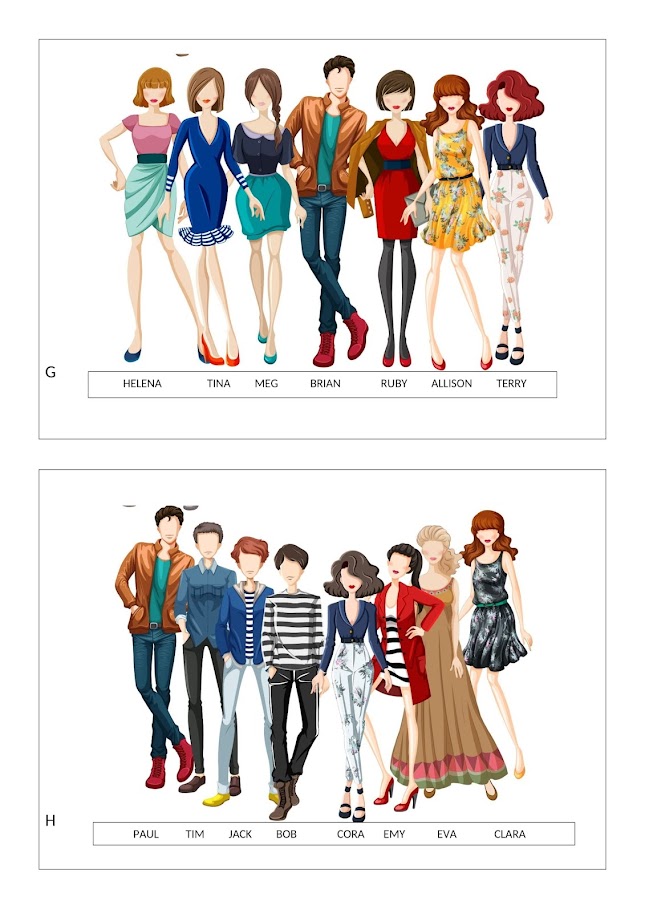
Clothes pair work
Per allenamento:
Thursday, 7 March 2019
INVALSI INGLESE 2019
Le prove INVALSI CBT
In
base all’art. 7, c. 1 del D. Lgs. 62/2017 le prove INVALSI:
– sono
censuarie, ossia sono rivolte a tutti gli allievi della III secondaria di primo
grado
– riguardano
tre ambiti disciplinari: Italiano, Matematica e Inglese
– si
compongono per ogni allievo di domande estratte da un ampio repertorio di
quesiti (banca di item) e variano
pertanto da studente a studente, mantenendo per ciascuna forma uguale
difficoltà e struttura
– sono
computer based (CBT) e si svolgono mediante utilizzo di computer connessi alla
rete internet in un arco temporale (finestra di somministrazione),
assegnato alla scuola da INVALSI tra l’1 aprile 2019 e il 18 aprile 2019;
Durata
delle prove:
Prova di comprensione del testo scritto (reading): 45 minuti; prova di comprensione del testo orale (listening): circa 30 minuti. La durata della prova di Inglese-listening può
variare di alcuni minuti in più o in meno in ragione della durata dei cinque
file audio di cui la prova si compone.
Per
gli allievi disabili e DSA può essere previsto un tempo aggiuntivo di 15 minuti
per ciascuna prova (Inglese-reading, Inglese-listening).
La prova INVALSI d’Inglese si compone di
due parti:
Parte 1: comprensione della lettura (reading).
Durata:
45 minuti: 3‐4 compiti (task) di livello A1 e 3‐4 compiti (task) di livello A2.
Ogni
task è formato:
·
[livello
A1] da un testo della lunghezza massima di 110 parole al quale sono associate
domande di comprensione (da un minimo di 3 a un massimo di 8),
·
[livello
A2] da un testo della lunghezza massima di 220 parole al quale sono associate
domande di comprensione (da un minimo di 3 a un massimo di 8).
Tipologia
di lettura:
·
lettura
veloce selettiva (quick selective reading) per cogliere significato globale/
informazioni specifiche (livello A1 e A2),
·
lettura
attenta (careful reading) per comprendere le idee principali (livello A1 e A2).
Tipologia
di testi: testi autentici, continui e discontinui, riconducibili ai descrittori
di lettura del QCER per il livello A1 e A2 con contenuti familiari per allievi
di III secondaria di primo grado.
Tipologia
di domande: a risposta multipla, a risposta aperta breve (massimo 4 parole), a
risposta Vero/Falso/Non Dato (True/False/Not Given), a collegamento (matching);
Parte 2: comprensione dell’ascolto (listening).
Durata: 30 minuti con 3‐4 compiti (task) di livello A1 e 3‐4 compiti (task) di livello A2.
Ogni
task è formato da un brano in Inglese (livello A1 o livello A2 del QCER) della
durata massima di 2 minuti con domande di comprensione (da un minimo di 3 a un
massimo di 8) alle quali l’allievo deve rispondere sul proprio computer.
Tipologia
di ascolto:
· ascolto
veloce selettivo (quick selective listening) per cogliere significato
globale/informazioni specifiche (livello A1 e A2),
·
ascolto
attento (careful listening) per comprendere le idee principali (livello A1 e
A2).
Tipologia
di brani per l’ascolto: brani autentici, riconducibili ai descrittori di
ascolto del QCER per il livello A1 e A2 con contenuti familiari per allievi di
III secondaria di primo grado.
Tipologia
di domande: a risposta multipla, a risposta aperta breve (massimo 4 parole), a
collegamento (matching).
Ogni
task è preceduto da specifiche istruzioni, che presentano le seguenti
caratteristiche:
–
sono scritte in Inglese e formulate con una terminologia e una modalità
corrispondente al livello A1 del QCER;
–
standardizzate: ogni tipologia di task, sia di reading sia di listening, è
accompagnata da istruzioni che hanno sempre la stessa formulazione, resa
disponibile sul sito dell’INVALSI insieme alla pubblicazione degli esempi
(sample) per ogni tipo di task.
La prova di ascolto (listening)
Durante
la pausa dopo la prova di reading, il responsabile del funzionamento dei computer,
in collaborazione con il docente responsabile della somministrazione, si
accerta che in ogni postazione sia presente l’audio‐cuffia e pochi minuti prima del
termine della pausa distribuisce le credenziali per l’accesso alla parte di
listening.
Terminata
la pausa tra la parte 1 e la parte 2, la parte di listening si svolge nel
seguente modo:
– il
docente responsabile della somministrazione comunica agli allievi di indossare
le audio‐cuffie;
–
gli allievi inseriscono le proprie credenziali per accedere alla parte di
listening;
–
gli allievi svolgono la parte di listening secondo le istruzioni che sentono in
audio‐cuffia
e secondo le indicazioni che leggono sullo schermo.
La
parte di listening è così strutturata:
·
avvio
task 1,
·
istruzioni
in Inglese per il task 1 (l’allievo ascolta e contestualmente legge le
istruzioni),
·
pausa
di 20 secondi per permettere all’allievo di visionare le domande del task 1,
·
primo
ascolto del sound file del task 1,
·
breve
pausa tecnica di 5 secondi,
·
secondo
ascolto del sound file del task 1,
·
pausa
di 20 secondi per il completamento e la verifica da parte dell’allievo delle
risposte fornite
·
avvio
task 2,
·
istruzioni
in Inglese per il task 2 (l’allievo ascolta e contestualmente legge le
istruzioni),
·
pausa
di 20 secondi per permettere all’allievo di visionare le domande del task 2,
·
primo
ascolto del sound file del task 2,
·
breve
pausa tecnica di 5 secondi,
·
secondo
ascolto del sound file del task 2,
·
pausa
di 20 secondi per il completamento e la verifica da parte dell’allievo delle
risposte fornite e così via per gli altri task
Gli allievi disabili e con DSA
Di
norma gli allievi disabili svolgono
le prove INVALSI, inclusa quella d’Inglese (art. 11, c. 4 del D. Lgs. 62/2017 e
nota MIUR 1865 del 10.10.2017).
Se
previsto dal PEI, possono essere adottate:
–
misure compensative:
·
tempo
aggiuntivo (fino a 15 min. per la prova di reading e un terzo ascolto per la
prova di listening).
–
misure dispensative:
·
dall’intera
prova,
·
da
una delle due parti (reading o listening).
Di
norma gli allievi con DSA svolgono
le prove INVALSI, inclusa quella d’Inglese (art. 11, c. 4 del D. Lgs. 62/2017 e
nota MIUR 1865 del 10.10.2017).
Se previsto dal PDP, possono essere adottate:
- misure compensative:
o
tempo
aggiuntivo (fino a 15 min. per la prova di reading e un terzo ascolto per la
prova di listening);
–
misure dispensative:
o
dall’intera
prova,
o
da
una delle due parti (reading o listening).
Simulazioni online per esercitazioni:
Testi acquistabili in libreria per esercitazioni con espansioni online:
- Monica Verzotto, Successful INVALSI. Inglese. Quaderno di allenamento alla Prova Nazionale di inglese. Pearson Longman editore, codice 9788883394867.
- Antonio Cecchi, Annarita De Chiara,
Invalsi Time. Trinity Whitebridge editore, codice 978-88-99673-30-7
Tuesday, 12 February 2019
Freddie Mercury
FREDDIE
MERCURY -
A ROCK MUSIC legend
Freddie
Mercury was
born
in the African island of Zanzibar in 1946.
His real
name was
Farrokh Bulsar, and his
family came
from India. He went to school in India, near
Mumbay.
He
hated
his
front teeth
because they came out of his
mouth
– the cause was that he had two extra teeth!
At school, everybody called him Freddie. He was
bullied for his aspect. He was very shy and didn’t have many friends.
He
liked
table-tennis,
hockey and boxing. He loved art
and he made a lot of drawings for friends and relatives. He had a real musical talent, so he started to learn the piano
when
he was
7 years
old.
He also
sang
in the school choir and played parts in school theatrical productions. He was
an excellent piano player.
When
he was 18, there were
political problems in
Zanzibar, so he and his
family had to move to London. He studied
design in an Art school there and sang in a
blues band in his free
time.
He met
Roger Taylor and Brian May, members of a
band called Smile, and
became the vocalist of
the band. They changed the band’s name
into Queen and
Freddie changed his surname into Mercury.
He fell in
love with Mary
Austin and went to
live with her. The
bassist John
Deacon joined the
band in 1971. Their
first album was Queen, but the
big success arrived with
their third
album, A
Night at
the Opera and
the single Bohemian
Rhapsody.
In
1975 Freddie was already very famous for his extraordinary
voice, his extravagances and his
performances during concerts.
Queen had tours in
Europe, Japan and the USA.
All
the members of
the band wrote songs and decided about the albums together, but
Freddie was the front-man of
the band. Their big
success continued all over
the world. They had a concert in
Sao Paulo in Brasil with
230.000 fans! Their
performance during the Live
Aid
charity
concert
in
1975, where a lot of artists sang to raise
money for starving
people in Africa, was epic. One
billion
people watched the concert on
TV!
The
band started
making videos of their songs, something new
for that
time.
Freddie
worked with
Dave
Clark to create the successful musical
“Time”; he danced in a
classical ballet show
in London with the Royal Ballet and recorded some
songs with
his favourite opera singer, Monserrat Caballè. The
song Barcelona became the
anthem for the 1992 Olympics. He loved
parties, having lots of
friends and… cats!
He
also released records as a soloist but
worked with Queen for all his life. After seven years of marriage with Mary, they stopped living together but they remained best friends. He had many
partners after that, women and men, but Mary was the love of his life. She worked with him and
helped him when he discovered that he had AIDS.
Freddie didn’t want anybody to know about his disease and kept it secret until
1991.
The
members of the band and his last partner, Jim
Hutton,
also knew he was ill but they worked together until the end. He announced to
his fans he had AIDS the day before his death. At that time there were no
therapies to fight this terrible disease. He died at the age of 45.
20
years after his death, he is still considered one of the greatest artists of
the history of rock music. There is a fantastic musical
about
Queen’s songs, We
Will Rock You and a very nice biopic with the actor Rami Malek
playing Freddie, Bohemian
Rhapsody.
Videos:
Inspiring Freddie: https://wror.com/2018/11/07/freddie-mercury-what-i-have-in-common/
Freddie Mercury Draw My Life:https://www.youtube.com/watch?v=A52JL03K5MA
Top 10 Queen Songs: https://www.youtube.com/watch?v=kVcT4LmiqhI
We Will Rock You Musical: https://www.youtube.com/watch?v=i9oCLIkVYoI
Bohemian Rhapsody Movie Clips: https://www.youtube.com/watch?v=4ifcOah-FQI
Songs with lyrics:
•I
want To
Break Free: https://www.youtube.com/watch?v=GBthBQ-cKJA
•Too
Much Love
Will Kill You: https://www.youtube.com/watch?v=YvY3LeSQhA8
•Another One Bites The Dust: https://www.youtube.com/watch?v=cGJ_IyFwieY
•Somebody To
Love: https://www.youtube.com/watch?v=zj69iA_goIk
•Radio
GaGa: https://www.youtube.com/watch?v=ZdZ_ef3O8xI
•The Show Must Go On: https://www.youtube.com/watch?v=uKLMYZlbIb8
•We Will
Rock You: https://www.youtube.com/watch?v=9Q1CduLhHP8
•We Are
The Champions: https://www.youtube.com/watch?v=O71fetlkCZo
•Bohemian Rhapsody: https://www.youtube.com/watch?v=nG_5LfMTel4
•A
Kind Of
Magic: https://www.youtube.com/watch?v=4uVluCQl4ko
•Under
Pressure: https://www.youtube.com/watch?v=krIwMS_wlJc
•Crazy Little Thing Called Love: https://www.youtube.com/watch?v=18sbJPKCo7Y
•Hammer To Fall: https://www.youtube.com/watch?v=i0giBmm1COY
•Don’t Stop
Me Now: https://www.youtube.com/watch?v=KKny_ia8Fvo
•Love
Of My Life: https://www.youtube.com/watch?v=p9woC3Mrq9w
•One
Vision: https://www.youtube.com/watch?v=-5u-AIhfcyE
•I
Want It All:
https://www.youtube.com/watch?v=Odkv4aE3pTI
Saturday, 15 December 2018
Songs for Christmas, 2018
CHRISTMAS 2018 HOMEWORK!
An exciting way to improve your pronunciation, sing along!!!:
- Elderbrook, "Old Friend": https://www.youtube.com/watch?v=Rqk5bo1pRW4
- Lady Gaga and Bradley Cooper, '"Hallow": https://www.youtube.com/watch?v=iPot3IZuJq
- Panic! At The Disco, "High Hopes": https://www.youtube.com/watch?v=eI6jW8KvJco
- Marshmello ft. Bastille, "Happier": https://www.youtube.com/watch?v=25Sx6uFmS5w
- Imagine Dragons, "Bad Liar": https://www.youtube.com/watch?v=nCZ_unHU13Q
- The Chainsmokers, "This Feeling": https://www.youtube.com/watch?v=tNylZDSnPTU
- Imagine Dragons, "Zero": https://www.youtube.com/watch?v=7tGebP_FWT4
Enjoy, and...
Wednesday, 27 June 2018
NATIVE AMERICAN ARTIFACTS by our students
Subscribe to:
Posts (Atom)